Back to ExploreFAAM Airborne Laboratory
Platform
FAAM Airborne Laboratory
Facility for Airborne Atmospheric Measurements Airborne Laboratory
- 2
- Campaigns
- 0
- Data Products

Overview
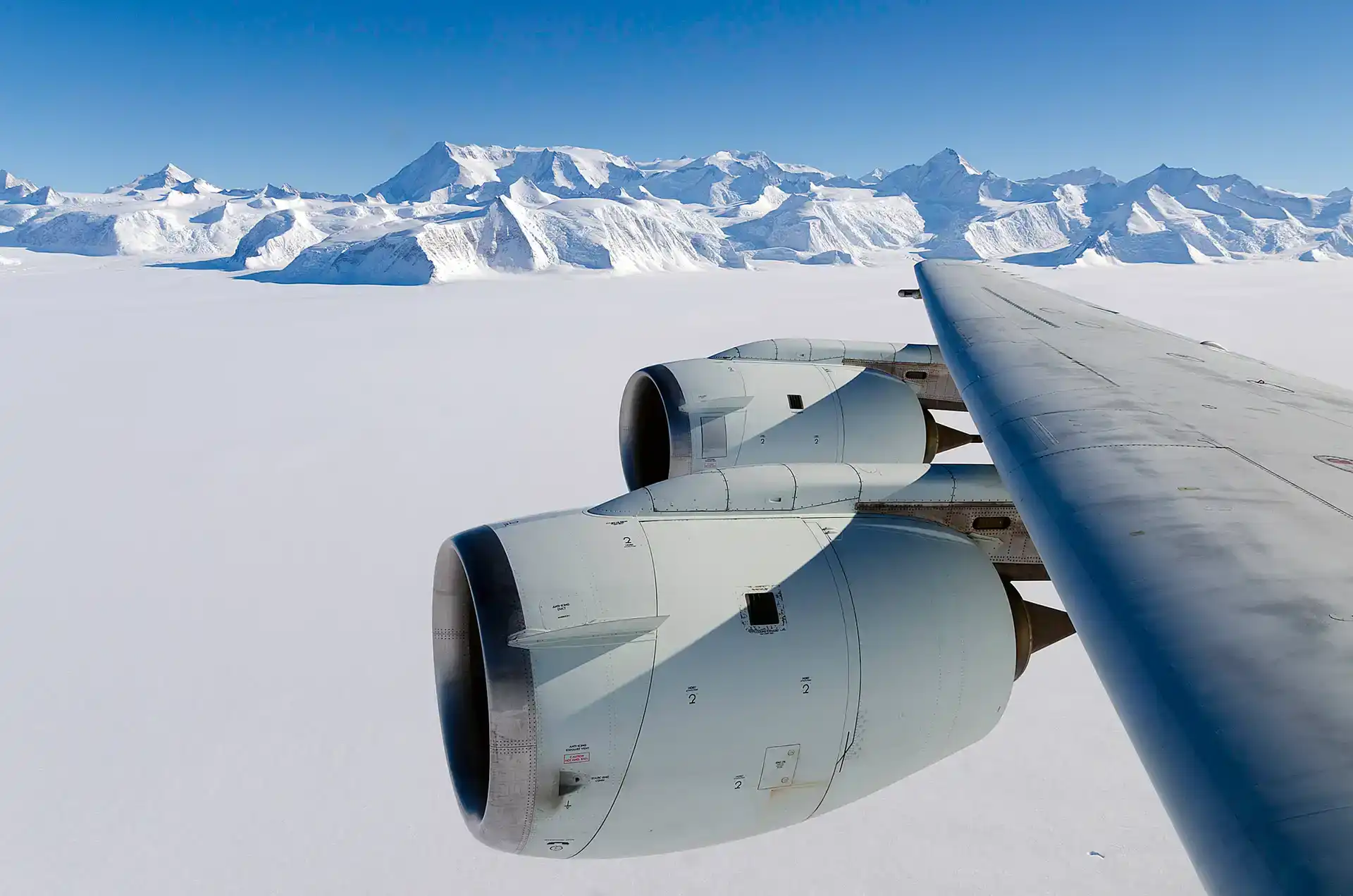
The FAAM Airborne Laboratory is a modified BAe 146-301 aircraft owned and operated by the UK Met Office and the Natural Environment Research Council (NERC). It is equipped with various instruments to study atmospheric chemistry, aerosol properties, cloud physics, convective systems, and other atmospheric processes. It has a service ceiling of 35,000 feet, a range of 2000 nautical miles, and an endurance of up to 6 hours. It can support up to 18 scientists during research flights.
Online information
Related Campaigns & Instruments
Review the instruments operated on this platform for each of these field campaigns
Slide 1 of 2
JAIVEx
Joint Airborne IASI Validation Experiment
2007
Ellington Field (EFD), Houston, TX
view all deployment dates
1 Deployment
· 0 Data Products| 2007-04-16 | 2007-05-04 |
The Shortwave Spectroradiometer (SWS) is a radiometer that measures absolute spectral radiance in the visible and near-infrared. It includes two Zeiss spectroradiometers that measure spectral radiance to determine cloud optical depth, particle size, and water path. One spectroradiometer operates in the 300-1100 nm range at a spectral resolution of 8 nm, while the other operates in the 900-2200 nm range at a resolution of 12 nm. SWS has a sampling frequency of 1 Hz. The Department of Energy’s Atmospheric Radiation Measurement (ARM) User Facility operated a ground-based SWS, and the Facility for Airborne Atmospheric Measurements (FAAM) operated an airborne version as part of the airborne laboratory.
Earth Science > Spectral/engineering > Visible Wavelengths > Visible Radiance
Earth Science > Spectral/engineering > Infrared Wavelengths > Infrared Radiance
The Microwave Airborne Radiometer Scanning System (MARSS) is a passive, along-track scanning microwave radiometer developed by the United Kingdom Met Office and Laboratoire de Méteórologie Dynamique du Centre National de Recherche Scientifique (LMD CNRS). It measures brightness temperature across five channels, including two at 89 and 157 GHz and three centered on the water vapor absorption line at 183 GHz. It is typically used for the calibration and validation of satellite observations. MARSS has a 3-second scan time and an accuracy of better than 1 K.
Earth Science > Spectral/engineering > Microwave
Earth Science > Spectral/engineering > Microwave > Brightness Temperature
Dropsondes, also called dropwindsondes, are instruments deployed from aircraft. They are equipped with Global Positioning System (GPS) receivers and sensors that record vertical profiles of pressure, temperature, humidity, wind speed, and wind direction. Dropsondes enable researchers to gather vertical profiles in remote areas and during severe weather. Typically, dropsondes have a vertical resolution of 5 meters and measure wind speed and direction every 0.25 seconds, while temperature, pressure, and humidity are recorded every 0.5 seconds.
Earth Science > Atmosphere > Atmospheric Winds > Wind Profiles
Earth Science > Atmosphere > Atmospheric Pressure
Earth Science > Atmosphere > Atmospheric Winds > Wind Profiles > Wind Velocity/speed Profiles
Earth Science > Atmosphere > Atmospheric Water Vapor > Water Vapor Indicators > Humidity
Earth Science > Atmosphere > Atmospheric Winds > Wind Profiles > Wind Direction Profiles
Earth Science > Atmosphere > Atmospheric Temperature
Generic-Chemistry Related Sensors (Gen-Chemistry) refers to non-specific instruments on a platform used for atmospheric chemistry measurements. These are typically in situ analyzers that measure chemical compounds such as trace gases, halocarbons, volatile organic compounds, nitrates, aerosols, and other chemical species. Measurements can include mixing ratios, composition, particle size, optical properties, and particle size distribution.
Earth Science > Atmosphere > Atmospheric Chemistry > Trace Gases/trace Species
Earth Science > Atmosphere > Atmospheric Chemistry
Earth Science > Atmosphere > Air Quality > Volatile Organic Compounds
Earth Science > Atmosphere > Aerosols
Earth Science > Atmosphere > Aerosols > Aerosol Particle Properties
Earth Science > Atmosphere > Atmospheric Chemistry > Halocarbons And Halogens
Earth Science > Atmosphere > Air Quality
Earth Science > Atmosphere > Atmospheric Chemistry > Carbon And Hydrocarbon Compounds
Generic-Microphysics Probes (Gen-Microphysics) are non-specific cloud probes on a platform used to measure cloud microphysics. These are typically in situ probes that measure the physical properties of clouds. These measurements can include particle size distribution, droplet growth, cloud optical thickness, liquid water content, droplet concentration, and cloud condensation nuclei.
Earth Science > Atmosphere > Clouds > Cloud Microphysics > Cloud Optical Depth/thickness
Earth Science > Atmosphere > Clouds > Cloud Microphysics > Cloud Droplet Concentration/size
Earth Science > Atmosphere > Clouds > Cloud Microphysics > Droplet Growth
Earth Science > Atmosphere > Clouds > Cloud Microphysics
Earth Science > Atmosphere > Clouds > Cloud Microphysics > Cloud Liquid Water/ice
Earth Science > Atmosphere > Clouds > Cloud Microphysics > Particle Size Distribution
Earth Science > Atmosphere > Clouds > Cloud Microphysics > Cloud Condensation Nuclei
The Dual-frequency Extension to In-flight Microwave Observing System (Deimos) is an airborne passive microwave radiometer developed by the UK Met Office. It measures brightness temperature at 23.8 and 50.1 GHz to study clouds, precipitation, and surfaces, including sea, land, and ice. It has a scan period of 3 seconds and a half-power beamwidth of 10 degrees. Deimos is typically used on the FAAM Airborne Laboratory alongside the Microwave Airborne Radiometer Scanning System (MARSS).
Earth Science > Spectral/engineering > Microwave > Brightness Temperature
The Fourier Transform Spectrometer (FTS) is a high-resolution spectrometer used in both airborne and ground-based applications. FTS measures the solar radiance reflected from surfaces, which can be used to estimate atmospheric concentrations of carbon monoxide (CO), carbon dioxide (CO2), and methane (CH4). It provides a spatial resolution of approximately 100m by 1000m and operates at a measurement frequency of 1 Hz during typical research flights.
Earth Science > Atmosphere > Atmospheric Chemistry > Carbon And Hydrocarbon Compounds > Methane
Earth Science > Atmosphere > Atmospheric Chemistry > Carbon And Hydrocarbon Compounds > Carbon Dioxide
Earth Science > Atmosphere > Atmospheric Chemistry > Carbon And Hydrocarbon Compounds > Carbon Monoxide
Earth Science > Atmosphere > Atmospheric Chemistry > Trace Gases/trace Species
Earth Science > Atmosphere > Atmospheric Chemistry
Earth Science > Atmosphere > Atmospheric Radiation > Solar Irradiance
Earth Science > Atmosphere > Atmospheric Radiation
EAQUATE
European AQUA Thermodynamic Experiment
2004
Italy, United Kingdom
view all deployment dates
1 Deployment
· 0 Data Products| 2004-09-04 | 2004-09-19 |
The Johnson-Williams Cloud Water Meter (CWM) is an airborne hot-wire probe developed by Johnson-Williams, Inc. The CWM measures the liquid water content (LWC) of clouds by detecting resistivity changes caused by cloud droplets evaporating from an exposed heated wire. It measures LWC from 0 to 6 grams per cubic meter and operates at airspeeds between 50 and 150 meters per second. The device operates on a constant current and typically records data at 2 Hz.
Earth Science > Atmosphere > Clouds > Cloud Microphysics > Cloud Liquid Water/ice
Earth Science > Atmosphere > Clouds > Cloud Microphysics
Generic-Atmospheric State (Gen-AtmsState) refers to non-specific instruments on a platform that measure atmospheric state parameters. These are typically in situ sensors that measure temperature, pressure, humidity, and wind speed and direction. Types of atmospheric state instruments include thermometers, hygrometers, barometers, and anemometers.
Earth Science > Atmosphere > Atmospheric Water Vapor
Earth Science > Atmosphere > Atmospheric Pressure
Earth Science > Atmosphere > Atmospheric Water Vapor > Water Vapor Indicators > Humidity
Earth Science > Atmosphere > Atmospheric Temperature > Surface Temperature > Air Temperature
Earth Science > Atmosphere > Atmospheric Winds > Upper Level Winds > Wind Direction
Earth Science > Atmosphere > Atmospheric Winds > Upper Level Winds > Wind Speed
Earth Science > Atmosphere > Atmospheric Pressure > Atmospheric Pressure Measurements
Earth Science > Atmosphere > Atmospheric Winds > Surface Winds > Wind Direction
Earth Science > Atmosphere > Atmospheric Temperature
Earth Science > Atmosphere > Atmospheric Winds > Surface Winds > Wind Speed
Earth Science > Atmosphere > Atmospheric Winds
The Fourier Transform Spectrometer (FTS) is a high-resolution spectrometer used in both airborne and ground-based applications. FTS measures the solar radiance reflected from surfaces, which can be used to estimate atmospheric concentrations of carbon monoxide (CO), carbon dioxide (CO2), and methane (CH4). It provides a spatial resolution of approximately 100m by 1000m and operates at a measurement frequency of 1 Hz during typical research flights.
Earth Science > Atmosphere > Atmospheric Chemistry > Carbon And Hydrocarbon Compounds > Methane
Earth Science > Atmosphere > Atmospheric Chemistry > Carbon And Hydrocarbon Compounds > Carbon Dioxide
Earth Science > Atmosphere > Atmospheric Chemistry > Carbon And Hydrocarbon Compounds > Carbon Monoxide
Earth Science > Atmosphere > Atmospheric Chemistry > Trace Gases/trace Species
Earth Science > Atmosphere > Atmospheric Chemistry
Earth Science > Atmosphere > Atmospheric Radiation > Solar Irradiance
Earth Science > Atmosphere > Atmospheric Radiation
The Dual-frequency Extension to In-flight Microwave Observing System (Deimos) is an airborne passive microwave radiometer developed by the UK Met Office. It measures brightness temperature at 23.8 and 50.1 GHz to study clouds, precipitation, and surfaces, including sea, land, and ice. It has a scan period of 3 seconds and a half-power beamwidth of 10 degrees. Deimos is typically used on the FAAM Airborne Laboratory alongside the Microwave Airborne Radiometer Scanning System (MARSS).
Earth Science > Spectral/engineering > Microwave > Brightness Temperature
The Nevzorov Probe is an in situ airborne hot-wire probe that measures clouds' liquid water content (LWC) and total water content (TWC). It determines LWC and TWC by detecting heat loss from its two sensors caused by evaporation of cloud water and convective heat transfer. Operating at a constant temperature of 90 degrees Celsius, it can measure LWC and TWC in the range of 0.005 to 3 grams per cubic meter. The Nevzorov Probe provides measurements every second with an accuracy of 10%.
Earth Science > Atmosphere > Clouds > Cloud Microphysics
Earth Science > Atmosphere > Clouds > Cloud Microphysics > Cloud Liquid Water/ice
Dropsondes, also called dropwindsondes, are instruments deployed from aircraft. They are equipped with Global Positioning System (GPS) receivers and sensors that record vertical profiles of pressure, temperature, humidity, wind speed, and wind direction. Dropsondes enable researchers to gather vertical profiles in remote areas and during severe weather. Typically, dropsondes have a vertical resolution of 5 meters and measure wind speed and direction every 0.25 seconds, while temperature, pressure, and humidity are recorded every 0.5 seconds.
Earth Science > Atmosphere > Atmospheric Winds > Wind Profiles
Earth Science > Atmosphere > Atmospheric Pressure
Earth Science > Atmosphere > Atmospheric Winds > Wind Profiles > Wind Velocity/speed Profiles
Earth Science > Atmosphere > Atmospheric Water Vapor > Water Vapor Indicators > Humidity
Earth Science > Atmosphere > Atmospheric Winds > Wind Profiles > Wind Direction Profiles
Earth Science > Atmosphere > Atmospheric Temperature
The Shortwave Spectroradiometer (SWS) is a radiometer that measures absolute spectral radiance in the visible and near-infrared. It includes two Zeiss spectroradiometers that measure spectral radiance to determine cloud optical depth, particle size, and water path. One spectroradiometer operates in the 300-1100 nm range at a spectral resolution of 8 nm, while the other operates in the 900-2200 nm range at a resolution of 12 nm. SWS has a sampling frequency of 1 Hz. The Department of Energy’s Atmospheric Radiation Measurement (ARM) User Facility operated a ground-based SWS, and the Facility for Airborne Atmospheric Measurements (FAAM) operated an airborne version as part of the airborne laboratory.
Earth Science > Spectral/engineering > Visible Wavelengths > Visible Radiance
Earth Science > Spectral/engineering > Infrared Wavelengths > Infrared Radiance
The Counterflow Virtual Impactor (CVI) is an in situ airborne instrument that samples cloud droplets by removing them from the surrounding air through inertial impaction. It is typically deployed with additional sensors to measure cloud particle concentration, cloud liquid water, and water vapor in the sampled droplets. The CVI can detect cloud droplets as small as 7 microns in diameter and has a typical time response of 1 second.
Earth Science > Atmosphere > Clouds > Cloud Microphysics
Earth Science > Atmosphere > Clouds > Cloud Microphysics > Cloud Liquid Water/ice
Earth Science > Atmosphere > Clouds > Cloud Microphysics > Cloud Droplet Concentration/size
Video cameras capture footage of various phenomena for research. They are used on aircraft to provide continuous views of weather and terrain below the flight path. Video cameras are also employed to verify the aircraft's flight track. Additionally, they are deployed at field sites to monitor changes in vegetation, land cover, clouds, air quality, glaciers, and other Earth science phenomena.
Earth Science > Spectral/engineering > Visible Wavelengths > Visible Imagery
Chilled Mirror Hygrometers (CMHs) are in situ sensors that directly measure dew point temperature by condensing water vapor onto a chilled mirror surface. The mirror's temperature is lowered with thermoelectric coolers until water vapor from the sample gas condenses as dew or frost. The mirror's temperature is then measured with a platinum resistance thermometer (PRT) to determine the dew point and humidity. CMHs have been used on both airborne and ground-based platforms and serve as the NIST-traceable reference standard for calibrating other sensors.
Earth Science > Atmosphere > Atmospheric Water Vapor > Water Vapor Indicators > Humidity
Earth Science > Atmosphere > Atmospheric Temperature > Surface Temperature > Dew Point Temperature
Earth Science > Atmosphere > Atmospheric Water Vapor > Water Vapor Indicators > Dew Point Temperature
Earth Science > Atmosphere > Atmospheric Temperature > Upper Air Temperature > Dew Point Temperature
Rosemount Temperature Probes are in situ airborne temperature sensors manufactured by Rosemount, Inc. They provide atmospheric temperature measurements and are typically used to collect flight-level meteorological observations. Rosemount Temperature Probes consist of temperature transmitters, thermocouple sensors, resistance temperature detectors, and other temperature sensors.
Earth Science > Atmosphere > Atmospheric Temperature > Upper Air Temperature
Earth Science > Atmosphere > Atmospheric Temperature
Generic-Microphysics Probes (Gen-Microphysics) are non-specific cloud probes on a platform used to measure cloud microphysics. These are typically in situ probes that measure the physical properties of clouds. These measurements can include particle size distribution, droplet growth, cloud optical thickness, liquid water content, droplet concentration, and cloud condensation nuclei.
Earth Science > Atmosphere > Clouds > Cloud Microphysics > Cloud Optical Depth/thickness
Earth Science > Atmosphere > Clouds > Cloud Microphysics > Cloud Droplet Concentration/size
Earth Science > Atmosphere > Clouds > Cloud Microphysics > Droplet Growth
Earth Science > Atmosphere > Clouds > Cloud Microphysics
Earth Science > Atmosphere > Clouds > Cloud Microphysics > Cloud Liquid Water/ice
Earth Science > Atmosphere > Clouds > Cloud Microphysics > Particle Size Distribution
Earth Science > Atmosphere > Clouds > Cloud Microphysics > Cloud Condensation Nuclei
The Lyman-alpha Hygrometer is an in situ hygrometer designed for deployment on airborne or ground-based platforms. It measures water vapor absorption at the Lyman-alpha wavelength (121.6 nm) of atomic hydrogen to determine the total water content in the atmosphere. It has a detection limit of 0.1 ppmv and a typical data acquisition rate of 1 second. The Lyman-alpha hygrometer provides water vapor measurements with 6% accuracy and 5% precision.
Earth Science > Atmosphere > Atmospheric Water Vapor > Water Vapor Indicators > Water Vapor
Earth Science > Atmosphere > Atmospheric Water Vapor > Water Vapor Profiles > Water Vapor Mixing Ratio Profiles
Earth Science > Atmosphere > Atmospheric Water Vapor > Water Vapor Indicators > Total Precipitable Water
Earth Science > Atmosphere > Atmospheric Water Vapor
Broadband Radiometers (BBR) are modified versions of the Kipp & Zonen CM-22 pyranometers and CG-4 pyrgeometers, adapted for use on airborne platforms with specialized instrument housings and signal amplification. BBR measures solar irradiance in the 0.2-3.6 μm wavelength range and infrared (IR) irradiance in the 4.5-42 μm range. These measurements can be used to determine net irradiance, radiative forcing, absorption, and albedo. It has a typical sampling rate of 1 Hz and a hemispheric field of view.
Earth Science > Atmosphere > Atmospheric Radiation > Solar Irradiance
Earth Science > Atmosphere > Atmospheric Radiation > Absorption
Earth Science > Atmosphere > Atmospheric Radiation > Radiative Forcing
Earth Science > Atmosphere > Atmospheric Radiation > Albedo
Earth Science > Atmosphere > Atmospheric Radiation > Radiative Flux
Earth Science > Atmosphere > Atmospheric Radiation